


“Each of us is more than the worst thing we’ve ever done.”
—Bryan Stevenson
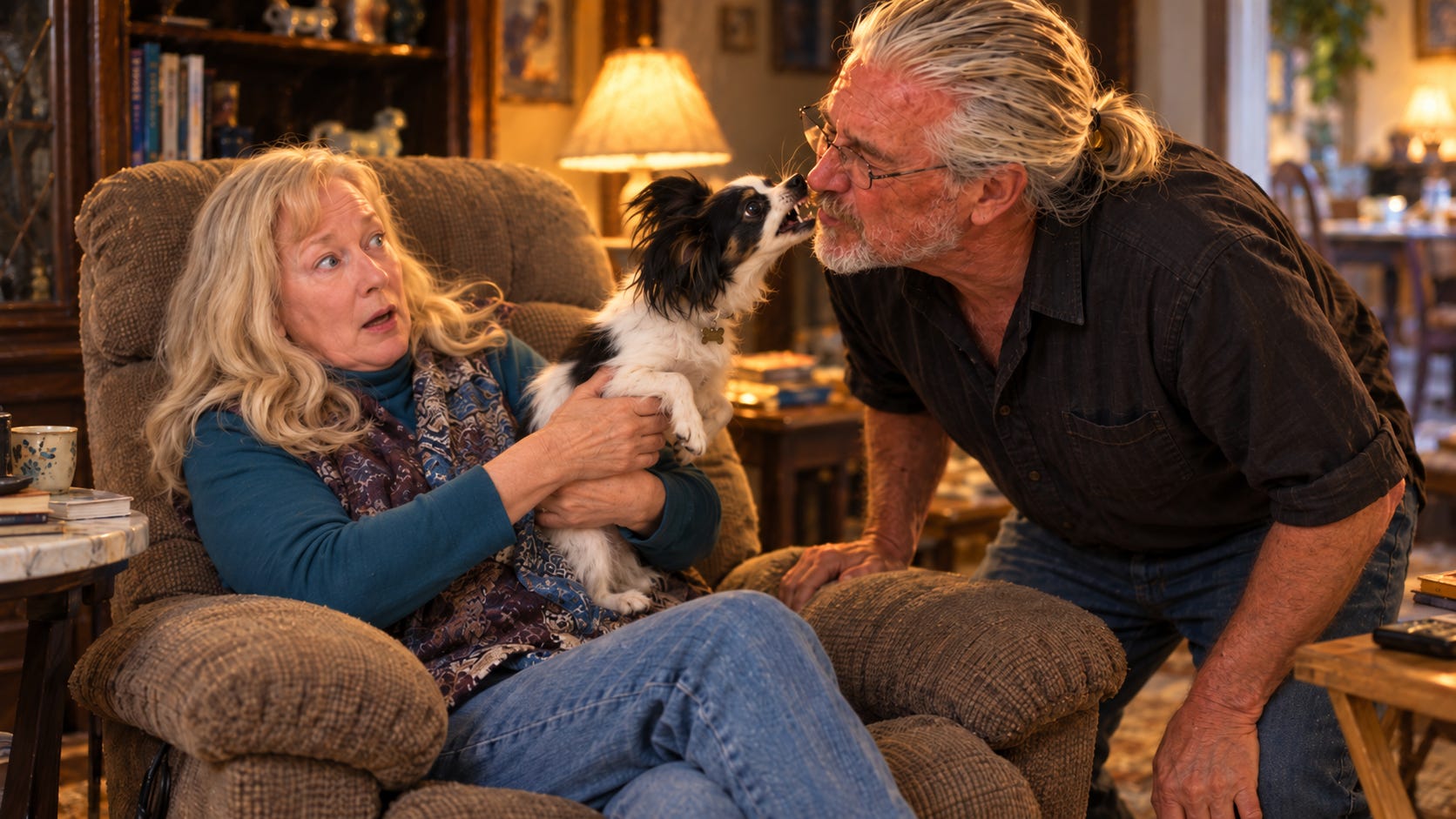
When I was in law school, a fellow student brought his dog to school a couple of times, saying he had to find him a new home. His landlord wouldn’t let him keep the dog. Bunny Chafowitz and I adopted him.
We have always named our pets with good Jewish names. At the time, we had only a Dalmatian, who we called Challah Bobalah because she loved challah — which I made from scratch every Friday and we shared with her after the prayer she patiently sat through every Shabbat — and she was as dumb as a loaf of bread. I’ve always liked the name “Avi” and have a good friend I’ve never met — I sense a future essay — by the name of Avi Golden.
Shortly after we adopted Avi, Challah died. Pretty sure Avi had nothing to do with it.
I think.
No, really. I’m certain. Challah developed a degenerative nerve disease. And although Avi immediately became a problem for me and was always getting on my nerves, I’m sure there’s no connection.
One night, Avi Bobalah — in honor of Challah, all our dogs are now Bobalahs — was sitting on Bunny Chafowitz’s lap. I was headed for bed and leaned over to kiss her goodnight.
Avi lunged and my nose turned to bloody confetti.
Thankfully, I don’t scar much. Look at my nose today and you’d be hard-pressed to find the long lines on either side — the last evidence of Avi’s anger.
A young couple attended a baseball game. Erika heard the call of nature and responded. Her husband offered to take their daughter off her hands, but Erika demurred: they both referred to the baby as their little “hot pocket” because her body heat helped in the slightly frigid air. Plus, she thought she’d change the baby’s diaper. And on the way back, Erika passed a food stand. She texted Ramses, her husband, a photo of the menu and asked if he’d like anything. He suggested something, adding, “Whatever [line] is shorter.”
Unbeknownst to them, they were being watched. (Yes, we live in a Panopticon. I’ve talked about this in other essays here and on other Substacks. I will, no doubt, talk about it often again.)
Ultimately, it seems, people had some unflattering things to say about Ramses. Those unflattering things were insults. But as so often happens in modern America’s advanced civilization, those insults turned to actual death threats.
In a California courtroom, my client was charged after law enforcement, listening in on jail calls between my client and a crazy woman with whom he had unfortunately gotten involved.
And I wrote a Romero motion.
A Romero motion is a California-specific motion the purpose of which is to invite a judge to rule as if a prior “strike” offense, in a sense, had never happened. We speak of “striking a strike.” Strikes — in the normal course of things — work to increase the consequences of a conviction. A “conviction” can come after either pleading guilty or no contest (because, in California “no contest” just means you’re not going to fight and, since you aren’t, the judge is going to assume you must be guilty — I mean, that’s the law, even if it’s completely unjust, not right, and possibly flat-out false. As with most states, California isn’t interested in the truth.
I treated this Romero motion as a Mitigation Statement. I collected letters as if I were writing a Mitigation Statement. I wrote the Romero motion as if it were not a Romero motion, but a Mitigation Statement.
So what is a Mitigation Statement?
Lorraine Hansberry, in her 1959 A Raisin in the Sun, had Mama (Lena Younger) tell us what we needed to know.
When you starts measuring somebody, measure him right, child, measure him right. Make sure you done taken into account what hills and valleys he come through before he got to wherever he is.
— Lorraine Hansberry, A Raisin in the Sun 145 (2004)
A Mitigation Statement is a legal brief whose aim is to provide the more complete picture a judge needs to measure somebody and measurement right. Until that statement is written, all a judge has is the crime. Avi turned a nose to confetti. Ramses sat and watched a ballgame while his wife scurried around, carrying their daughter, hunting and gathering, serving his needs. And my client deals drugs and hides ammo in a couple of Central California storage units.
Those are the initial reports. They are devoid of context. The judges — whether hearers of Avi’s story, television viewers watching Erika and Ramses, or a real judge in a real courtroom hearing a prosecutor argue for prison — have nothing more to go on.
Mitigation — the reduction of the severity, harm, or impact of something — is the missing piece. The mitigation statement is comprised of the words that provide the missing piece. For Avi, it’s going to be when he gets the Paul Harvey treatment and you hear the rest of the story. For Ramses — in this essay it will be the same — he also gets a Substack post written by Erika. And my client gets the full-blown legal document that comes with an explanation of what the law says, why the law provides a space for leniency despite whatever the prosecutor says, and letters of support from friends, close acquaintances such as co-workers, and employers that I weave together into a more complete story of who they are.
Sometimes the mitigation goes so far as to completely overturn an accusation. Mitigation doesn’t always do this, though. And it doesn’t always need to: in a sentencing context — or when asking for something to be done in the interest of justice, like granting a Romero motion — it might concern things like coercion, youth, relevant trauma, efforts to make restitution, the fact of having a minor role in the criminal activity. California’s rule, for example, expressly includes any circumstances that can matter without necessarily amounting to a defense.
In other words, what Hansberry’s Mama said. Or the poet, Kahlil Gibran.
And when the black thread breaks the weaver shall look into the whole cloth, and he shall examine the loom also.
—Kahlil Gibran, “On Crime and Punishment,” The Prophet
The prosecutor has shown the judge the broken black thread. So I begin to gather the other threads. To look at the whole cloth. Examine the loom — the one that both pre-existed the womb from which my client was born and maintained the milieu into which he was born.

What else belongs to this life? What helped shape it? What brought it to stand before a judge?
When I’m telling the story of Avi, I already have that information in my head. It’s just a matter of me, the storytelling, finishing the story. For Ramses story, I turn to other sources. It’s an informal investigation, if you will.
With my clients, it’s a little more involved. First and most obviously, I talk to my client. Sometimes I use a more formal system like the Justice Story app where the client answers questions to give me a full history of his family, his early life, things that have happened to him, education, mental health, etc. In every case, I ask for character letters.
All this is aimed at discovering the person my client is: I already know the thing he is accused of doing. My job is to help differentiate the thing from the person; to ensure the person does not remain the thing the prosecutor’s caricature has tried to make of them.
Well-written letters are filled with stories, not adjectives. The old writer’s adage — show, don’t tell — is the guidepost. And I help my clients, their families, their friends by explaining what just makes a letter and what makes a useful letter, a good letter, a letter to provide the fodder for the Mitigation Statement I will write.
These things are more formal and the investigation wider because the aim and setting are more formal and wider. With Avi and Ramses, we needed just a little more context; for my clients, I often must tell a condensed story of lives no one person has witnessed.
She has lived for nineteen years. There is all that life that has happened outside of me, beyond me.
—Tillie Olsen, I Stand Here Ironing, in Tell Me a Riddle (1961)
But there is yet more my Mitigation Statement must do in a criminal case. My investigation has looked backward, but now I must show the way forward. My letter writers also tell the judge what support will be available to my client and his future success: a place to live, a job, transportation, someone who will actually be there.
And sometimes we have to talk about the impact on the family. Courts don’t care much about intergenerational trauma — perhaps that’s one reason they inflict so much of it on our society — but sometimes they will stop to consider who is going to take care of a client’s autistic child or dying mother.
What I know now, my son: Evil begets evil. It grows. It transmutes, so that sometimes you cannot see that the evil in the world began as the evil in your own home. I’m sorry you have suffered. I’m sorry for the way your suffering casts a shadow over your life, over the woman you have yet to marry, the children you have yet to have.
— Yaa Gyasi, Homegoing, excerpted on the Yorktown Public Library Blog
My hope is to write something that might break this cycle. I ask, “Can this proceeding become an interruption in a damaging history rather than another chapter of it?” This question is always hinted at, directed implicitly at, the judge. I already know it could do that; only the judge will decide whether it can.
In the case of the client I hinted at above, numerous fantastic letters — I wish I could share them, but I hope you’ll understand why I can’t — were written by family, friends, co-workers, and employers. As I’ve done for this essay, I fleshed out the body of his life seasoned with quotes from the letters attached to the motion.
And the judge measured my client. He looked over all the hills and not just the recently traversed valley. We walked on, ignoring the complaint and objection of the prosecutor who withdrew all offers to resolve the case after the Romero was granted. Not only did we win the Romero motion, but a multi-year prison sentence was suspended and probation provided the answer to my question: damaging history stopped in its tracks; clear shot at a brighter future that I’ve not a single doubt will be realized.
Erika’s mitigation statement showed that Ramses just wanted to be with his wife, didn’t want her missing the game, and that’s where his head was. Erika returned with the food. Ramses moved things so she could sit and offered to help her. She handed him food; he offered to manage things so she could eat first. But she had already eaten earlier and he had not had a meal all day. Erika told him to go ahead.
The death threats against Ramses are particularly ironic. Because the whole reason Erika and Ramses were at the Giants game was because a dear friend of Ramses who shared a deep love of baseball had recently died.
Ramses was grieving.
And Erika had suggested the Giants game as an escape.
You don’t know what is happening to another human being; you can only know what you see.
— James Baldwin, If Beale Street Could Talk (1974)
Erika’s burden was visible; her husband’s grief was not. She asked people to understand the act of care that they had wrongly interpreted as evidence against him.

And Avi? People first hearing about what Avi did that night seem surprised we did not have him put down. That seemed crazy to us then; it still is now.
Because now you get the rest of the story.
When I bent over to kiss my Bunny Chafowitz goodnight, Avi growled.
I growled back.
Avi was a mean son of a bitch his whole life. But in his own way, he was a good dog. You just had to be careful with him. Especially with men. He liked women, but he did not like men.
We always thought, because he was so mean, that we would be glad to see him finally go. I don’t know about Bunny Chafowitz, but that turns out not to be true so much for me. I am very sad. I feel much subdued over his death.
— Rick Horowitz, Journal Entry (June 13, 2018) (unpublished personal journal) (on file with author)
What’s true of people is equally true of dogs.
Ain’t no one all good or all bad.
— Brothers: On the Road (Apple TV television broadcast Sept. 22, 2026)
My nose was evidence. It wasn’t a biography.
Comparative negligence...? And for the record, Avi was a good dog and I do miss him.